



ALiSEA Webinar: Link and Learn Agroecology from the Field
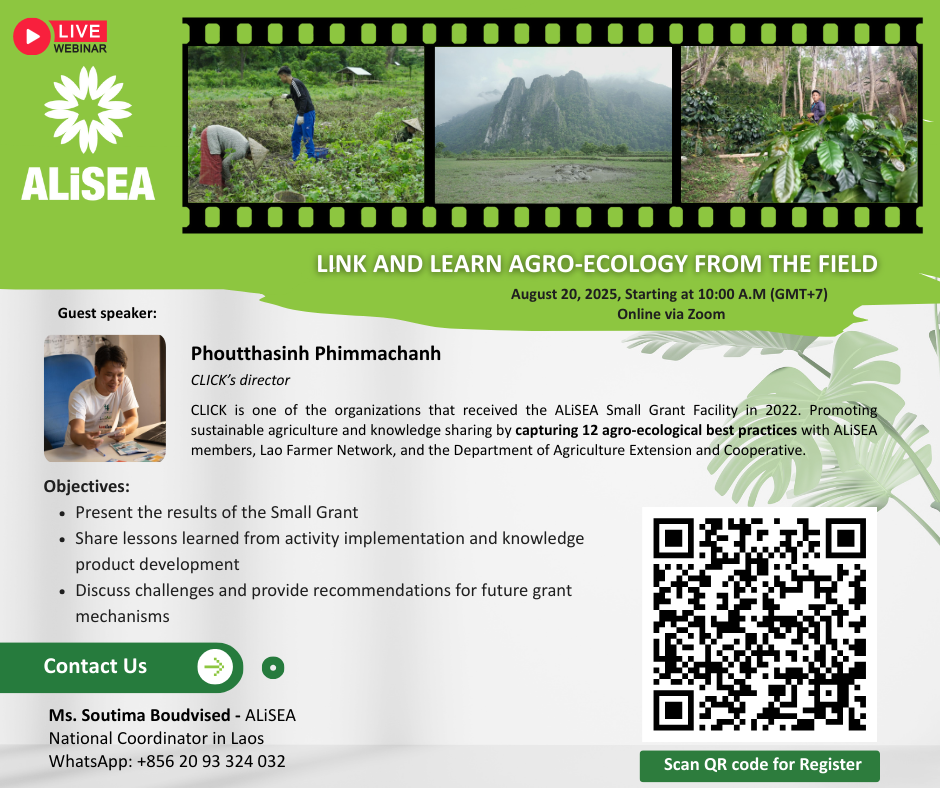
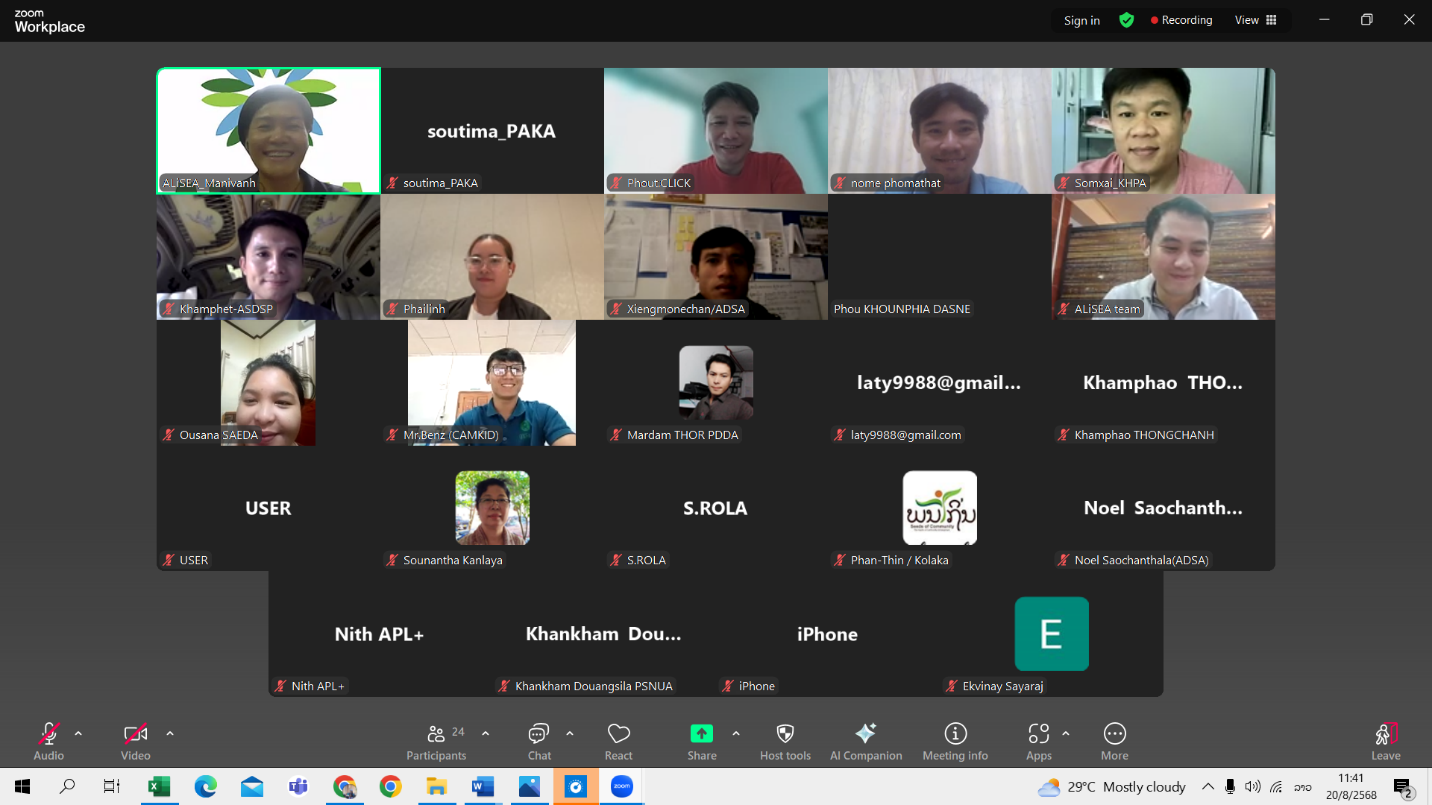
On August 20, 2025, the Agroecology Learning Alliance in Southeast Asia (ALiSEA) hosted a live webinar titled “Link and Learn Agroecology from the Field.” The event brought over 37 people together who were ALiSEA members and non-members to share knowledge and discuss.
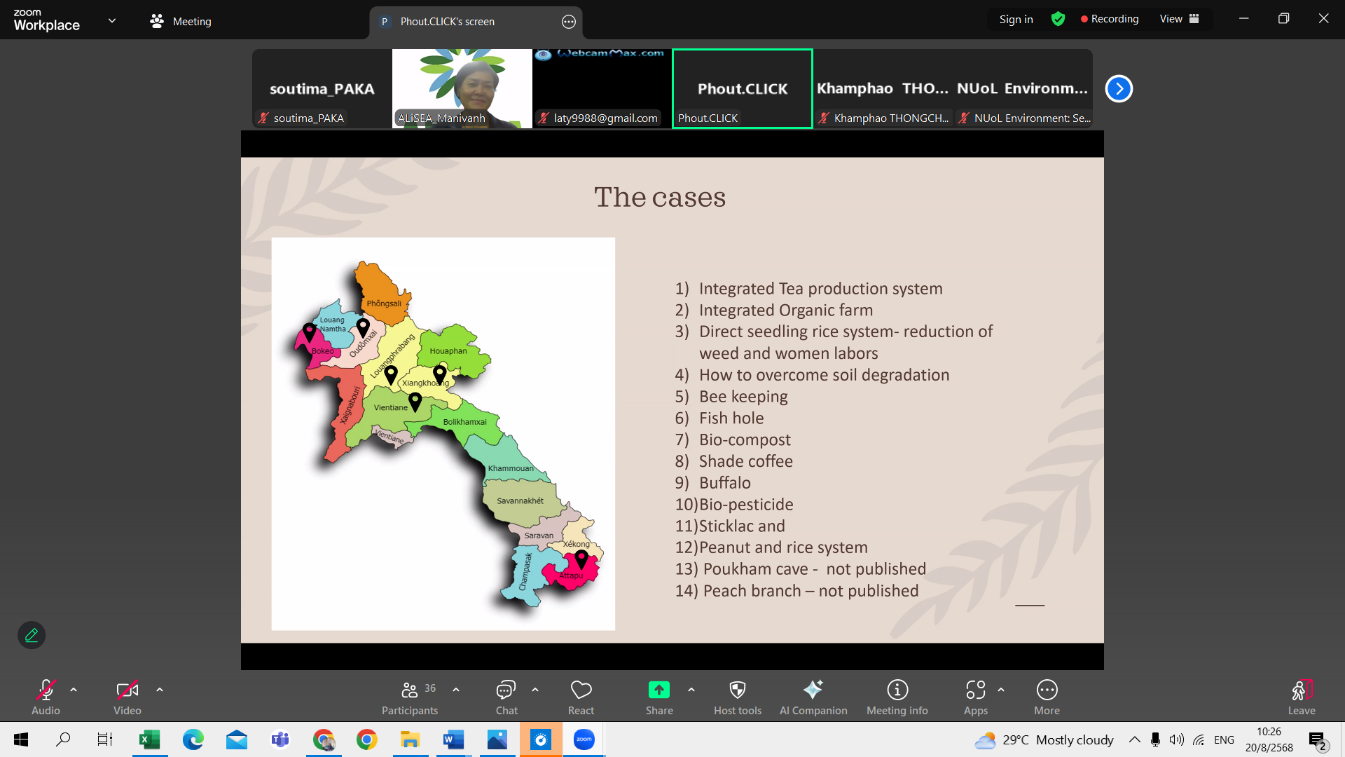
The webinar featured guest speaker Mr. Phoutthasinh Phimmachanh, director of CLICK, one of the organizations that received an ALiSEA Small Grant Facility in 2022. He shared the results of their grant project, which focused on promoting sustainable agriculture and knowledge sharing. His presentation highlighted the project’s success in documenting and sharing 12 agroecological best practices with ALiSEA members, the Lao Farmer Network, and the Department of Agriculture Extension and Cooperative.
The main objectives of his presentation were to:
- Present the results and impact of the Small Grant.
- Share valuable lessons learned from project implementation and the development of knowledge products.
- Discuss challenges and provide recommendations for future grant mechanisms to ensure their effectiveness.
Watching 12 videos here: https://www.youtube.com/@aliseamekong/videos
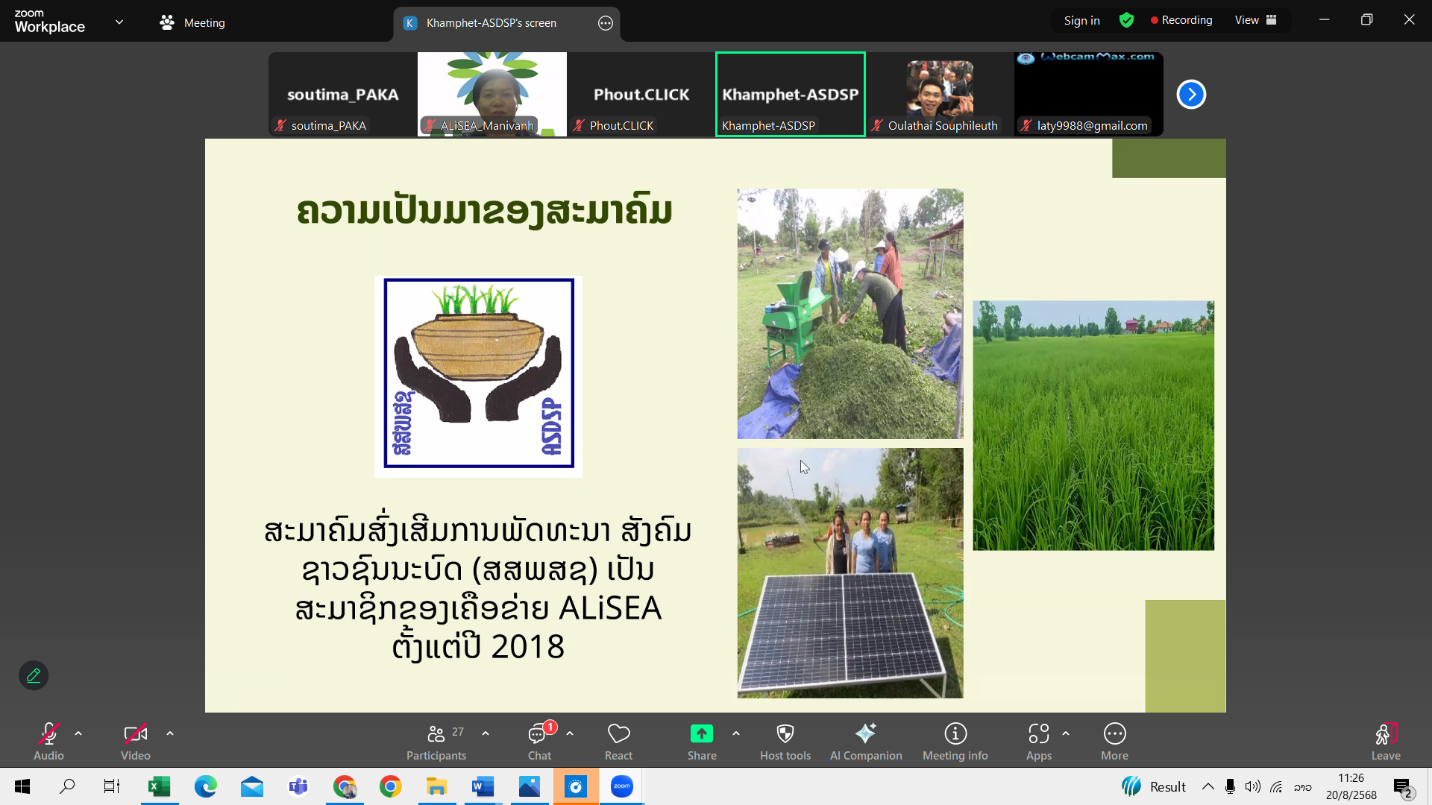
The webinar also included a presentation by Mr. Khamphet, representing the Association to Support the Development of Peasant Societies (ASDSP). He provided a detailed overview of how to secure funding from the Agroecology Fund (AEF), a key resource for organizations working to advance agroecology. His insights were particularly helpful for those looking to expand their projects and secure financial support.
Following the presentations, a dynamic exchange with participants generated several important key points, which are below:
- Participants emphasized the need to consolidate information into easily accessible platforms, such as through the use of artificial intelligence (AI). “Mr. Oulathai, From American College”
- There was also a specific interest in sticklac production, a traditional form of farming that offers significant potential.
The discussion also highlighted a creative idea: using videos related to agroecology to engage and educate secondary school students. This initiative would help young people better understand the importance of agroecology and its role in a sustainable future.