



ALISEA Laos organized the National Policy Dialogue on ASEAN Agroecology Transition Guidelines
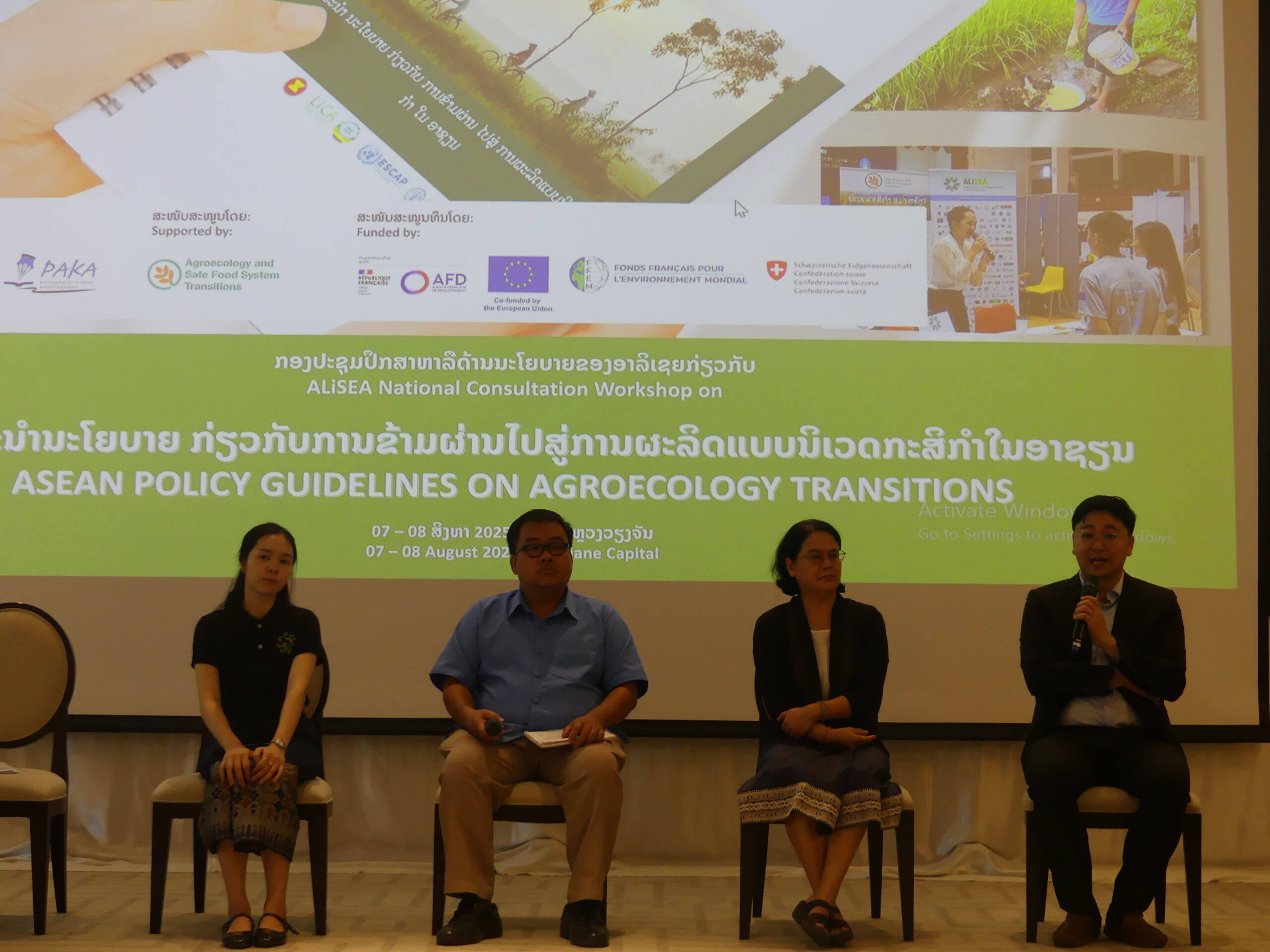
More than 45 representatives from farmer organizations, government bodies, CSOs, NGOs, academics, the private sector, and development partners attended the ALiSEA National Policy Dialogue Workshop on the ASEAN Agroecology Transition Guidelines (AET Guidelines) on 7–8 August 2025 in Vientiane Capital, Lao PDR.
The workshop was organized by the Agroecology Learning Alliance in South East Asia (ALiSEA), with support from the national executive team asPAKA, SAEDA, and SEED, with regional coordination by GRET. It served as a platform to introduce the AET Guidelines and connect with both national and regional agroecology initiatives. The event was supported by the French Development Agency (AFD), the European Union (EU), the French Facility for Global Environment (FFEM), and the Belgian Development Cooperation (DGD).

ALiSEA unites more than 205 organizations across Southeast Asia, including 75 based in Laos, with the goal of promoting knowledge exchange, shaping policy, and scaling up agroecological practices. The dialogue in Vientiane built on insights from earlier consultations, underscoring the importance of multi-stakeholder collaboration in advancing sustainable food systems.
Over two days, participants discussed how to align local agroecology initiatives with the AET Guidelines, explored synergies between national policy and ASEAN priorities, and reviewed existing ALiSEA experiences to identify best practices that could be replicated more widely.

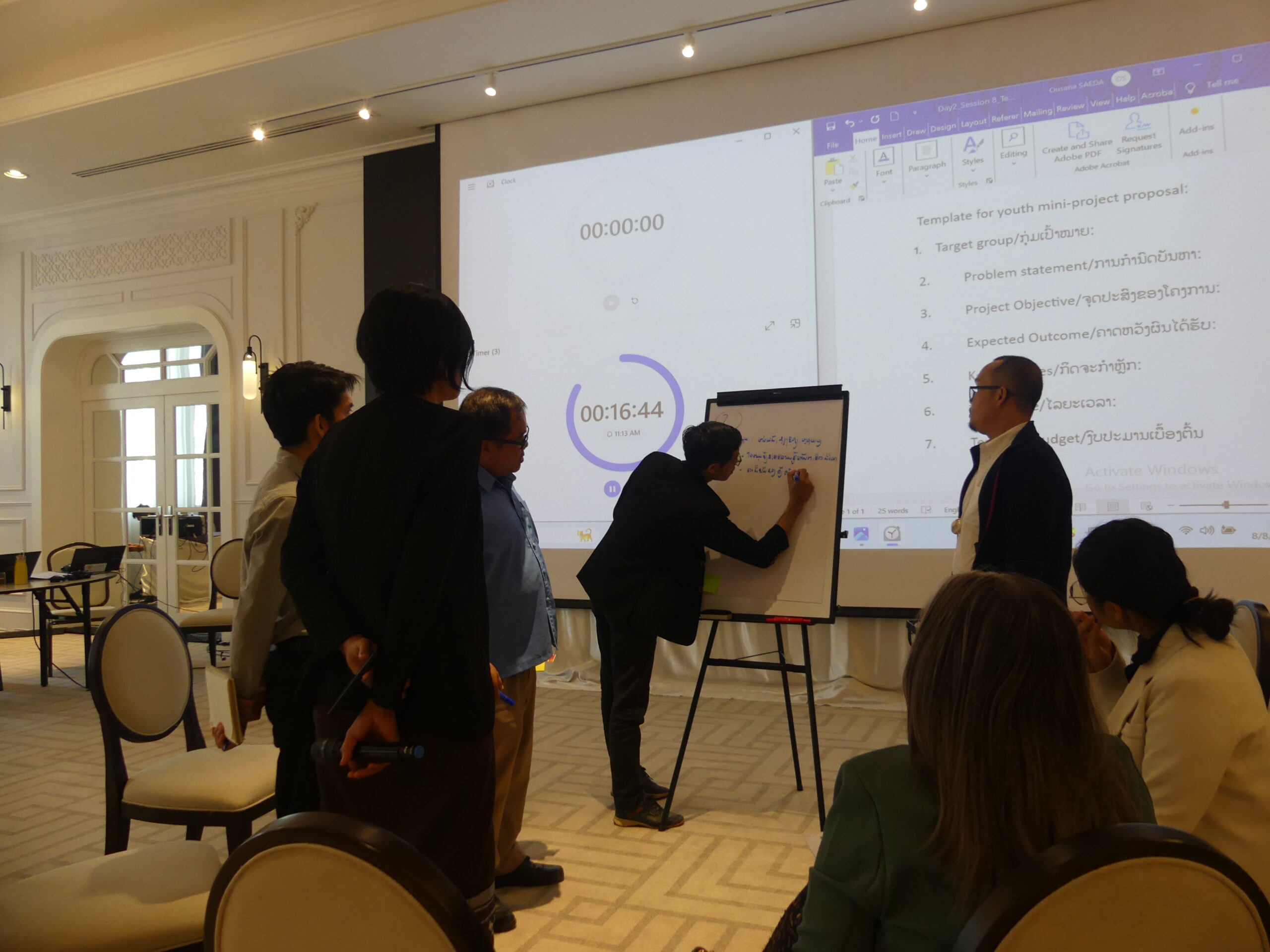
A key highlight of the workshop was the focus on youth engagement in agriculture and the need to make agroecology more appealing to new generations. Panel discussions and group activities shed light on opportunities, challenges and recommendations on the issue on agroecology transition, land, inputs, investment, markets, and technical support in local and national policies.
Another important issue was pesticide risk management. Representatives from the Department of Agriculture, Department of Environment, INGOs/CSOs, FOs, and academic institutions shared perspectives on policy gaps, human health, animal and environmental impacts, and safe handling practices. Their recommendations are to increase control in the public awareness campaigns, enforcement of safety standards, and greater capacity building for farmers and extension workers.


By the close of the workshop, participants had agreed on concrete next steps for ALiSEA and its members to enhance capacity building for members, especially youth and farmer organizations, and increase collaboration to enforced the ASEAN AET Guidelines into practicing in communities, local and the national levels.
The outcomes of this dialogue will contribute to wider regional agroecology efforts, reaffirming the government’s vision of Laos in agriculture development to a sustainable, resilient, and safe food system in Laos and across Southeast Asia.