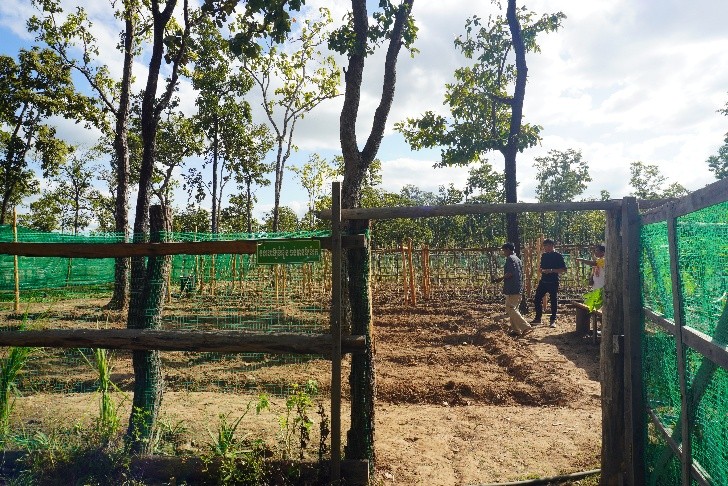



Field Visit to Ou Kak Agroforestry Village – ECo-WAYS Project
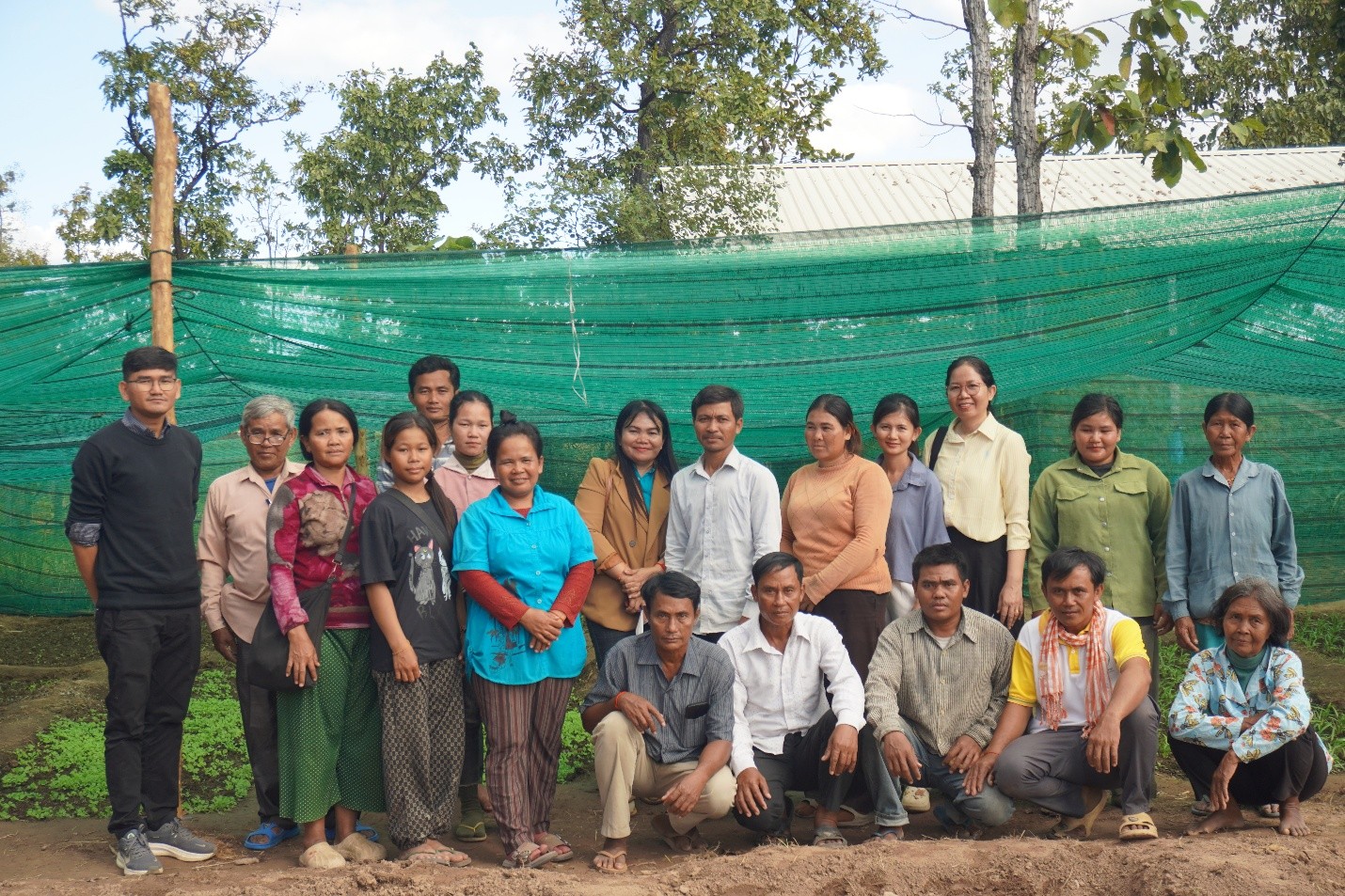
On 11 December 2025, ALiSEA coordinated a meeting and field visit for Uni4Coop to Ou Kak Agroforestry Village, where FLO is implementing an agroforestry project: “ECo-WAYS: Empowering Communities, Women, and Youth in Agroforestry for Sustainability” in Kratie. There were 22 participants (female: 13).
The field visit was organized by FLO in close coordination with ALiSEA with two main objectives: (1) to monitor the progress and implementation of the ALiSEA Small Grant project in Ou Kak Agroforestry Village, and (2) to facilitate a donor field visit for Uni4Coop to observe project results and engage directly with the community under their support.
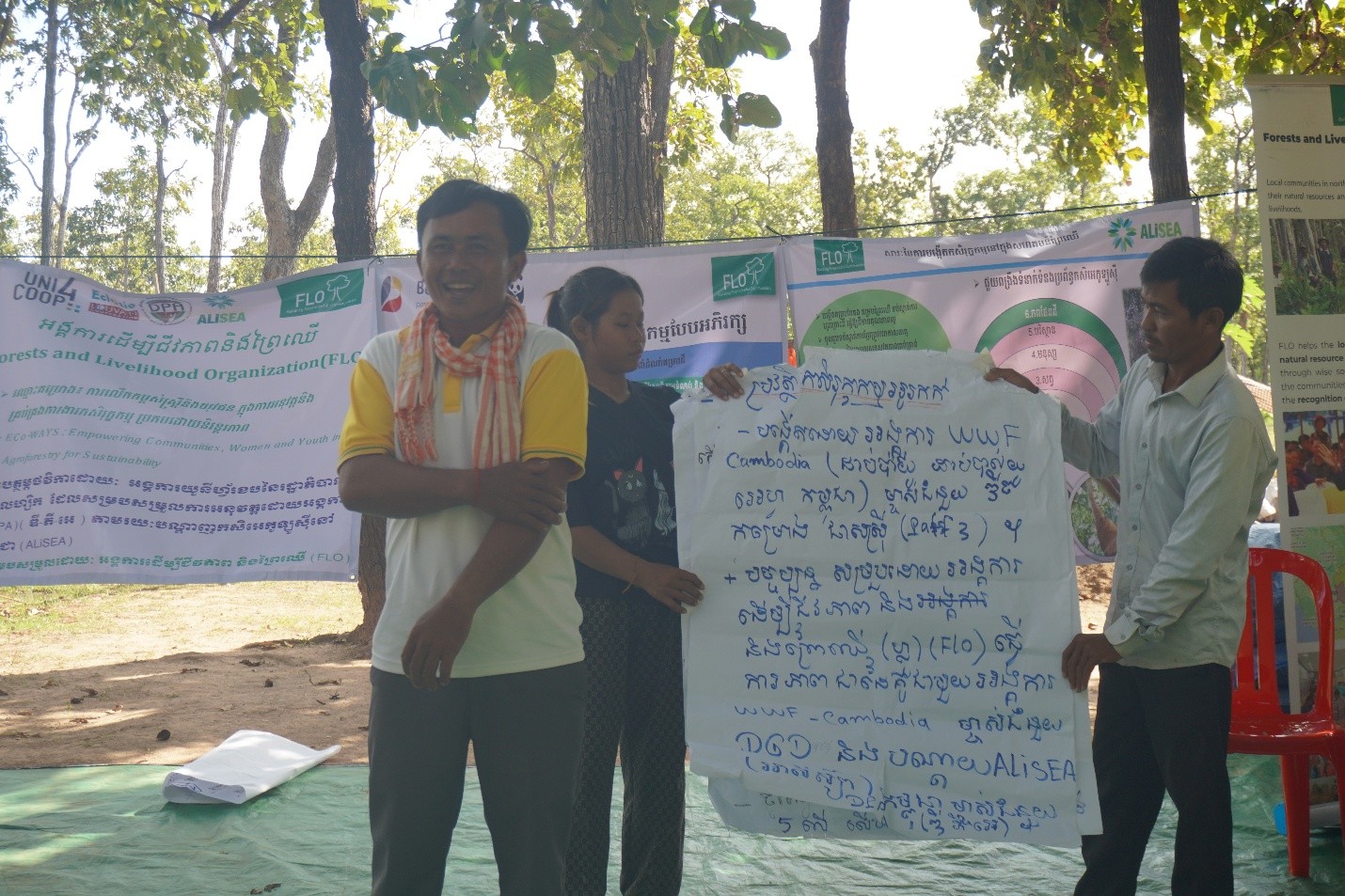
Mr. Yes Trea, presented the background of Ou Kok Agroforestry Village to the meeting
During the field visit, we observed land preparation activities, including clearing and preparing designated plots and incorporating natural and bio-input matter to enhance soil fertility, including the use of cover crops and compost for improving soil health.
Overall, the coordination meeting and field visit demonstrated strong progress toward the project objectives. The establishment of a community-managed agroforestry learning center, improved farming practices, strengthened market access, and increased participation of women and youth represent key results of the ECO-WAYS project. The visit also strengthened collaboration among FLO, ALiSEA, Uni4Coop, and the community, reinforcing shared commitment to sustainable agroforestry development and community resilience.
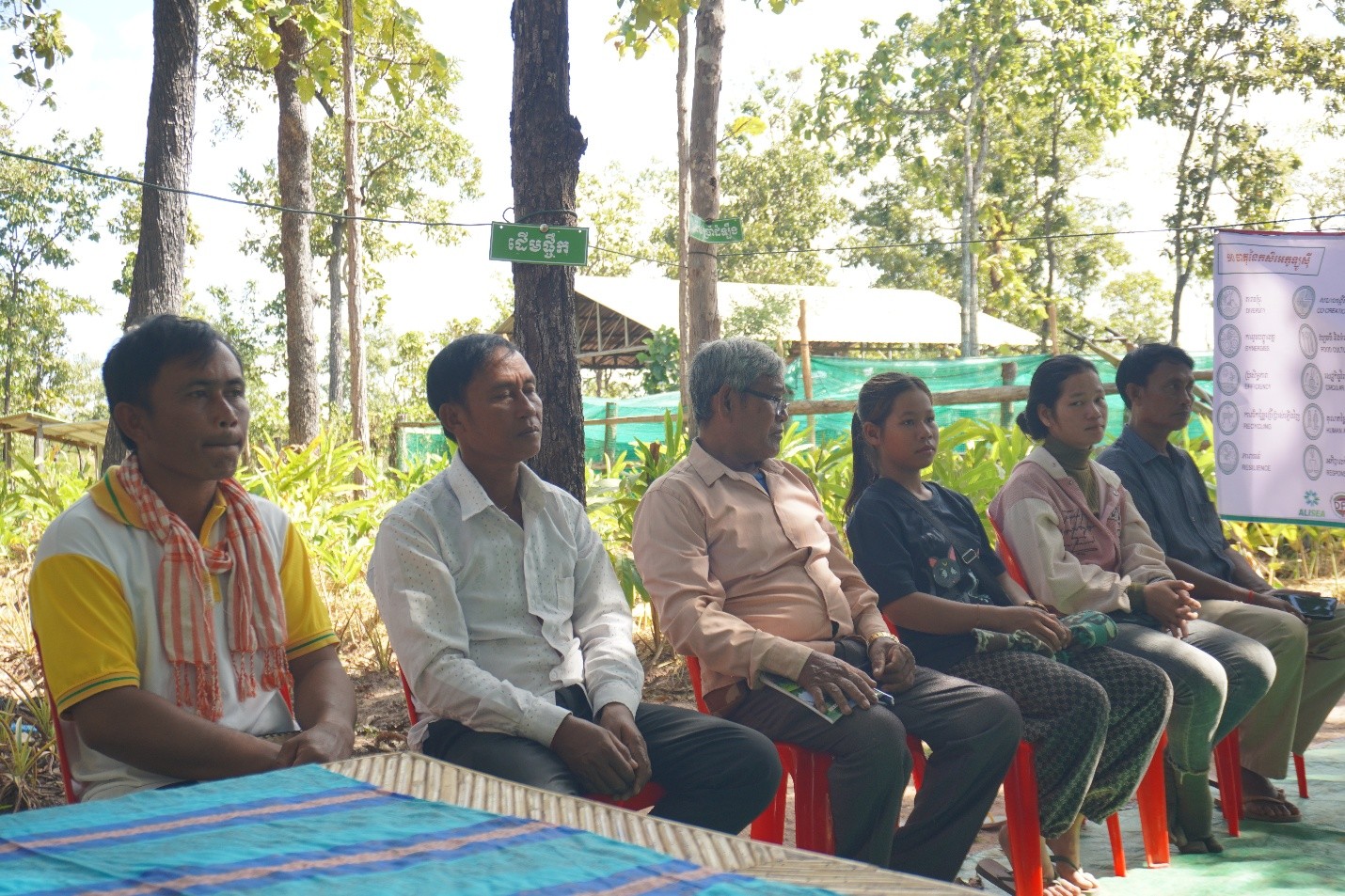
Participants during the meeting
Key learning from observation on the field visit to Ou Kak agroforestry village:
- Governance: the clear shared roles of members build the concept of saving, which is important for financial literacy. They also have the women in the leading roles and the young farmers involved in the farming process. The participation of women and youth in agroforestry activities contributes to innovation, knowledge transfer, and long-term sustainability, especially in indigenous communities like theirs.
- Integrate the community center with the learning center, where the members or farmers gather there for learning and demonstrating the hands-on practice, peer-to-peer exchange, and continuous experimentation. It improved farmers’ skills and confidence, particularly among women and youth.
- Integrate the agroecology into the existing practices of the community, which help them generate income while preserving their local tradition, culture, and environment. The agroecology helps restore and improve the soil fertility and reduce dependence on external inputs. They can produce the natural fertilizers from locally available materials such as cow manure and leaf litter, which is cost-effective and environmentally sustainable.
Market access and extending the connection with local authority have shown an essential impact within the coordination of the ALiSEA to coordinate the beneficiaries of members to exhibition events. So they could increase product visibility and income opportunities for farmers.
-
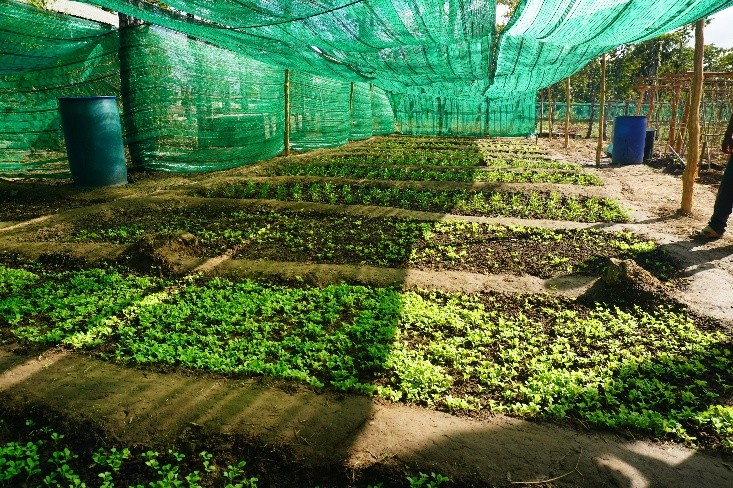
- Designated plots for agroecology practices in Agroforestry Village