



Today, 5 June, is World Environment Day
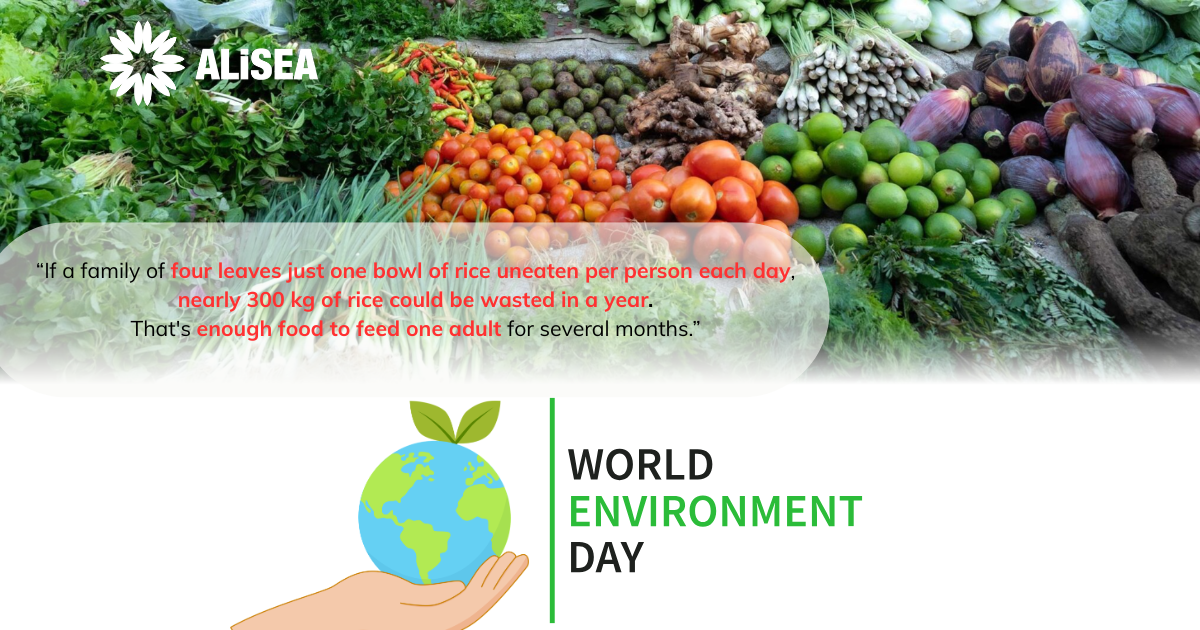
When we think about environmental pollution, we often picture factory emissions, traffic congestion, or plastic waste. Yet, few people realize that the way we produce, consume, and waste food also has a profound impact on our planet.
Here are some figures worth reflecting on:
- Around one-third of all food produced globally is lost or wasted, amounting to approximately 1.3 billion tonnes every year. (FAO)
- In 2022 alone, the world wasted an estimated 1.05 billion tonnes of food at household, food service, and retail levels—nearly 20% of all food available to consumers. (UNEP Food Waste Index Report, 2024)
- On average, each person wastes around 79 kilograms of food annually—equivalent to more than 1.5 kilograms every week. (UNEP Food Waste Index Report, 2024)
- At least one billion meals are discarded every day worldwide, while an estimated 783 million people continue to face hunger. (UNEP, 2024)
- Food loss and waste account for approximately 8–10% of global greenhouse gas emissions, making it a significant contributor to the climate crisis. (UNFCCC)
- Global agrifood systems are responsible for around one-third of human-induced greenhouse gas emissions, from food production and processing to transportation and consumption. (FAO)
- Behind every kilogram of wasted food lies a hidden cost: the land, water, energy, labor, and natural resources used to produce it—resources that could have been used more wisely and sustainably.
In the face of these challenges, agroecology offers a promising pathway toward more sustainable food systems.
By reducing dependence on synthetic inputs, enhancing biodiversity, restoring soil health, making efficient use of natural resources, and strengthening connections between producers and consumers, agroecology helps build food systems that are both environmentally sustainable and resilient to climate change.
This World Environment Day, let us take a moment to reflect on the way we produce, purchase, prepare, and consume our food.
- Every meal is a choice.
- Every choice has an impact.
- And every impact helps shape the future of our food systems and the planet we all share.
Together, through responsible production and consumption, we can contribute to a healthier environment, stronger communities, and a more sustainable future for generations to come.