


Thematic Webinar: Rice-Duck Farming – Sharing Experience
Sustainable Agriculture: The Rice-Duck Farming System
Sustainable agriculture is becoming increasingly important in Lao PDR, particularly in upland areas where farmers face challenges related to soil degradation, high input costs, and climate variability. Through the implementation of the ASSET project in Xieng Khouang Province, efforts have been made to promote agroecological practices that improve both productivity and resilience. One promising approach is the rice-duck farming system, which integrates livestock and crop production in a mutually beneficial way.
Expert Insights
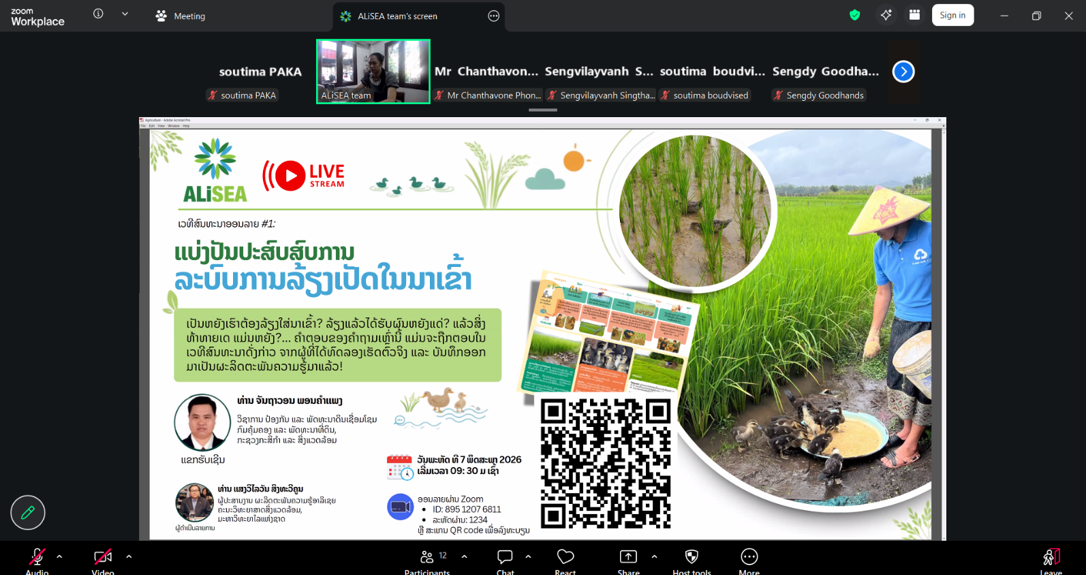
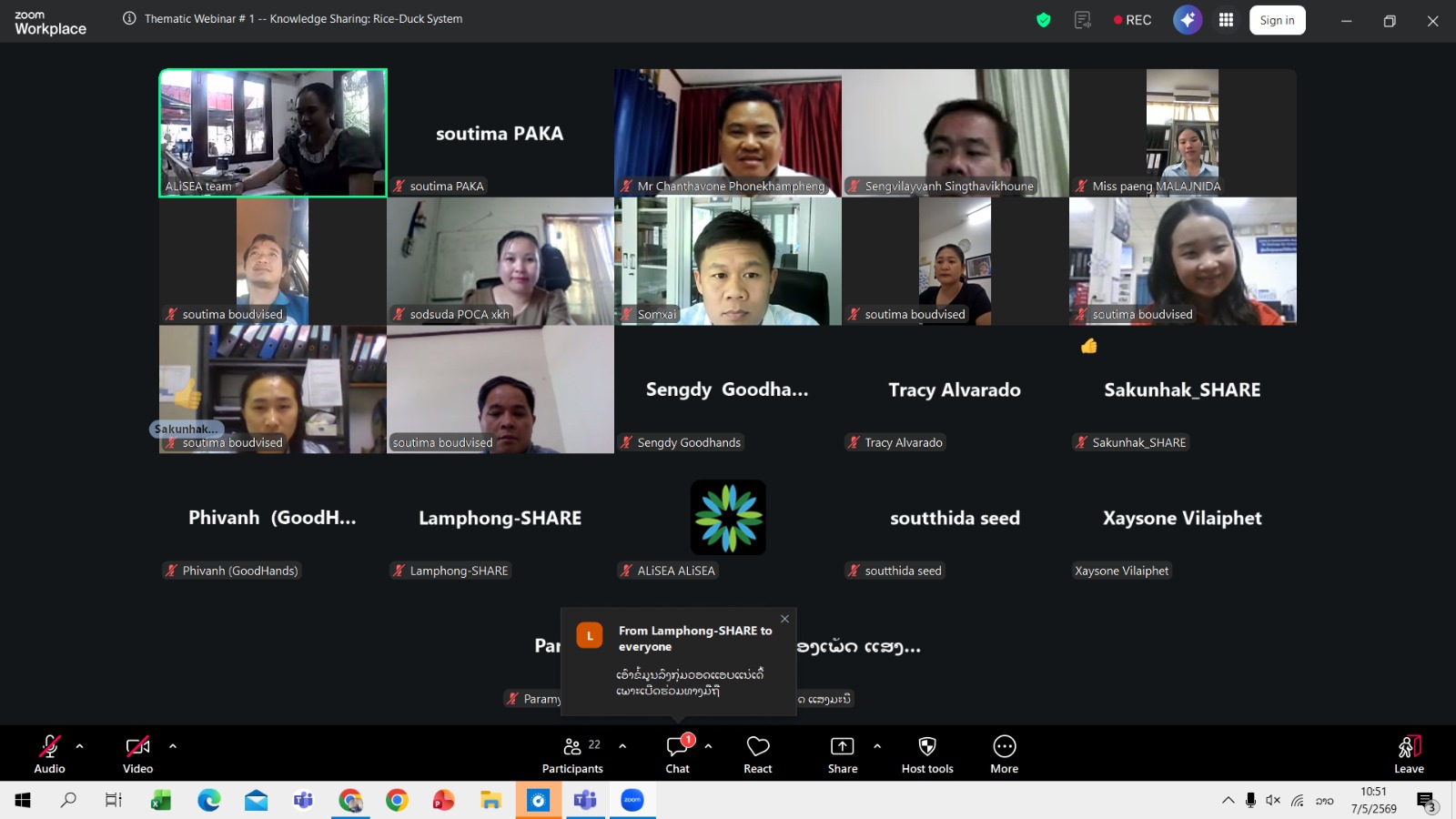
A session organized on 07 May 2026 brought together more than 25 participants, including both ALiSEA members and non-members. The session featured a guest speaker, Mr. Chanthavone Phonekhampheng, head of the Soil Degradation Prevention and Land Restoration Unit, DLAM, who shared his hands-on experience and techniques on the rice-duck farming system.
Benefits of the System
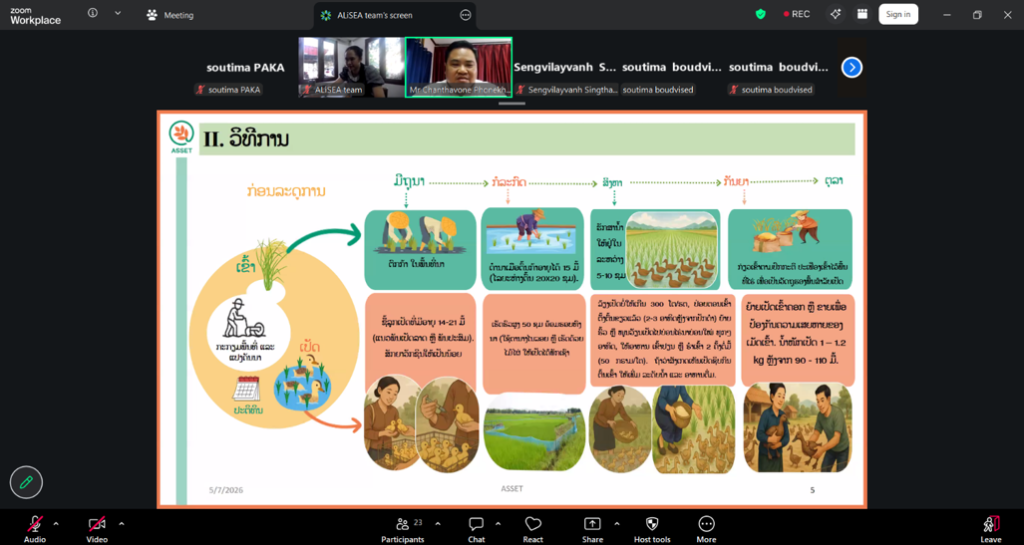
The rice-duck system provides valuable opportunities for income diversification, which can improve farmers’ resilience and livelihoods. In addition to harvesting rice, farmers can generate income from selling ducks for meat and producing eggs for both household consumption and the market. The system also helps reduce expenses by lowering the need for chemical fertilizers and pesticides, as ducks naturally control pests and contribute to soil fertility. This integrated approach not only increases overall farm productivity but also reduces economic risks, making it a promising model for sustainable and profitable farming.
Leveraging Digital Knowledge
The session highlighted increasing attention toward the rice-duck system as an innovative and practical solution for sustainable agriculture. Emphasis was placed on its potential to improve soil health, manage pests naturally, and generate additional income for farming households.
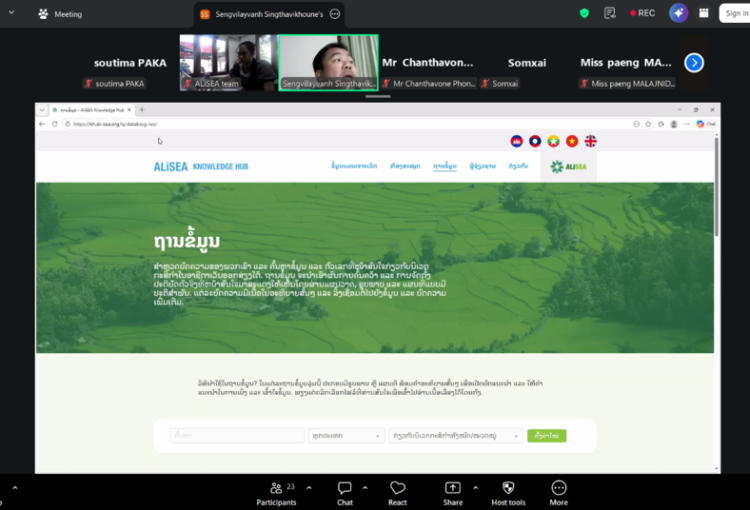
As an additional session, Mr. Sengvilayavnh Singthavikhoune, ALiSEA Knowledge Management (KM) Coordinator, introduced the ALiSEA Knowledge Hub. He highlighted the platform as a valuable tool for sharing information, resources, and experiences related to agroecology and sustainable agriculture. The Knowledge Hub aims to connect stakeholders, support learning, and facilitate access to practical knowledge that can be applied in the field. This introduction helped strengthen understanding of how digital tools and knowledge-sharing platforms can support the scaling up of agroecological practices across Laos and the wider region.