


Online Thematic workshops on Update Our Progress on Value Addition for Agroecology Products
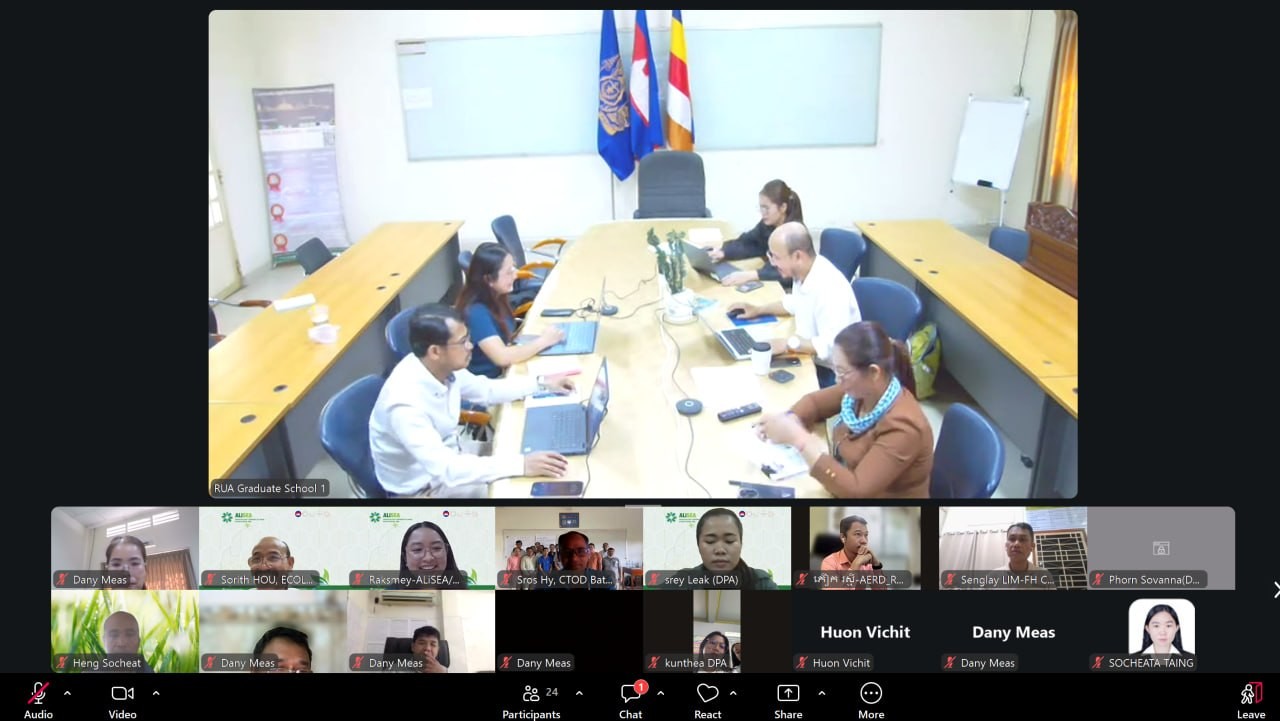
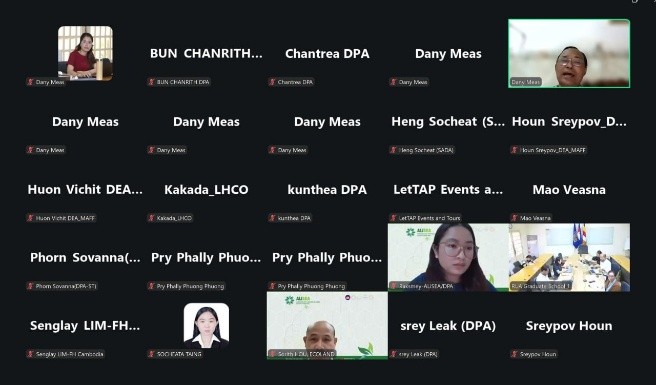
The thematic workshop was organized on 27 March 2026 under the topic “Update: Our Progress on Value Addition for Agroecology Products.” This event happened at the Postgraduate School of the Royal University of Agriculture (RUA) in a hybrid format, enabling participation both in person and via Zoom. This event brought together 40 participants (24 female), including practitioners, cooperatives, and market actors. The participants exchanged experiences, lessons learned, and practical insights on enhancing market recognition and value for agroecological products.
As part of ongoing learning and knowledge exchange, the workshop also served as a platform to provide updates from organizations and market actors actively promoting agroecological products and supporting value addition initiatives.
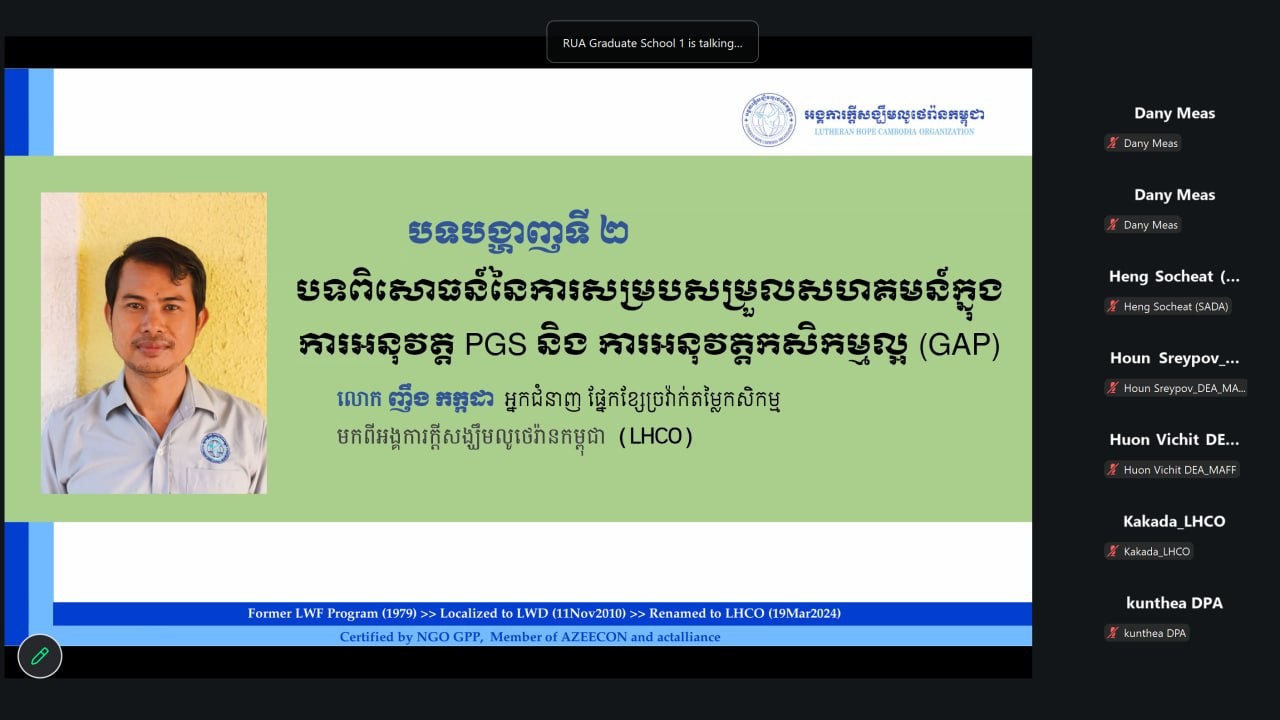
During the session, Mr. Nhoeng Kakada, Agriculture and Value Chain Specialist (AVCS), Lutheran Hope Cambodia Organization (LHCO), presented the context and rationale for introducing the Participatory Guarantee System (PGS) and Good Agricultural Practices (GAP) among local cooperatives, outlining the implementation process as well as key challenges and lessons learned for scaling up the initiative. PGS was being introduced by LHCO under the support of the ALiSEA small grant in 2024.
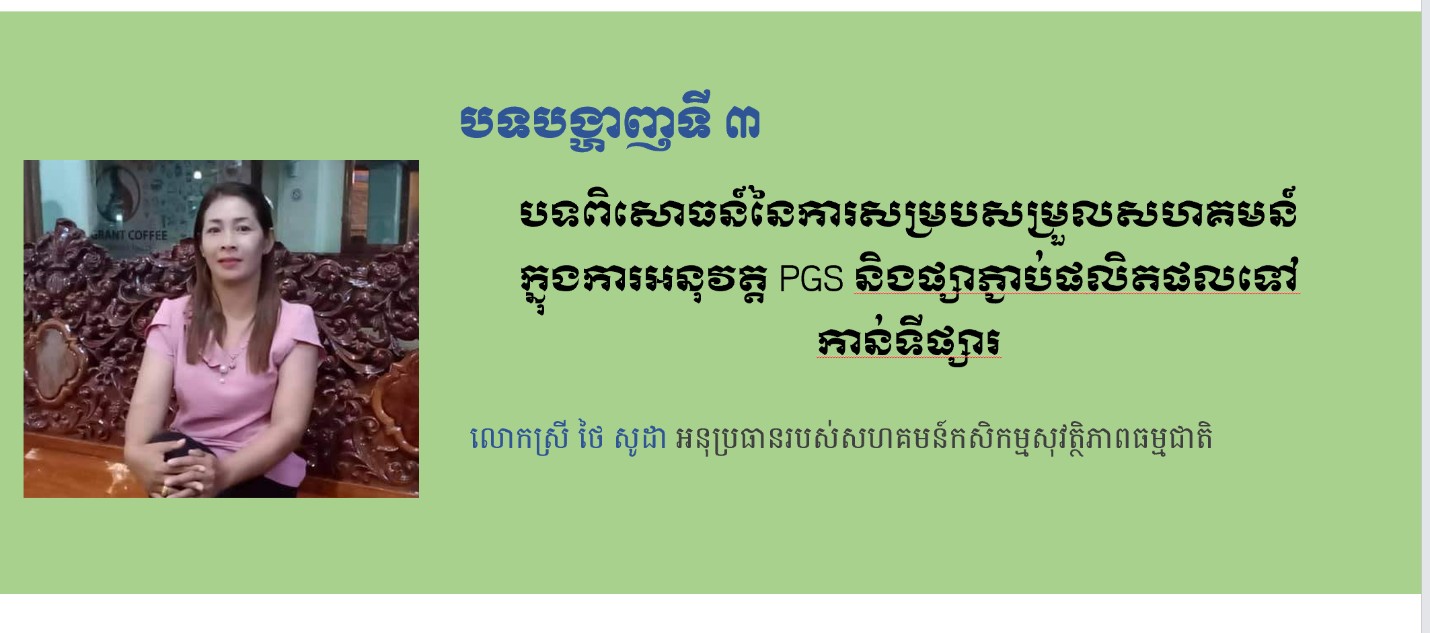 In addition, Ms. Thai Soda, a vice president of ECOFARM, shared her experiences on the collaboration model and implementation of PGS with customers. She highlighted ECOFARM’s role in promoting agroecological products, the collaborative approach between farmers, cooperatives, and consumers, the mechanisms used to ensure trust and transparency, and the benefits and lessons learned from strengthening linkages between producers and markets.
ECOFARM currently supplies its products through several channels: direct sales to consumers, distribution to nine primary schools in Siem Reap, and partnerships with markets such as Phnom Penh Khmer Community Market and Amarak Phnom Penh Farm. To expand market access, she highlighted the importance of product exhibitions, online promotion, and sponsorship of specific events, as well as organizing farm visits (consumer day or exchange visit) to build trust with potential buyers. She also emphasized that maintaining strong relationships with local authorities plays a crucial role in promoting products and strengthening consumer trust. Furthermore, the weekly market in Siem Reap is one market destination that serves not only as a sales place but also as a space to promote safe products.
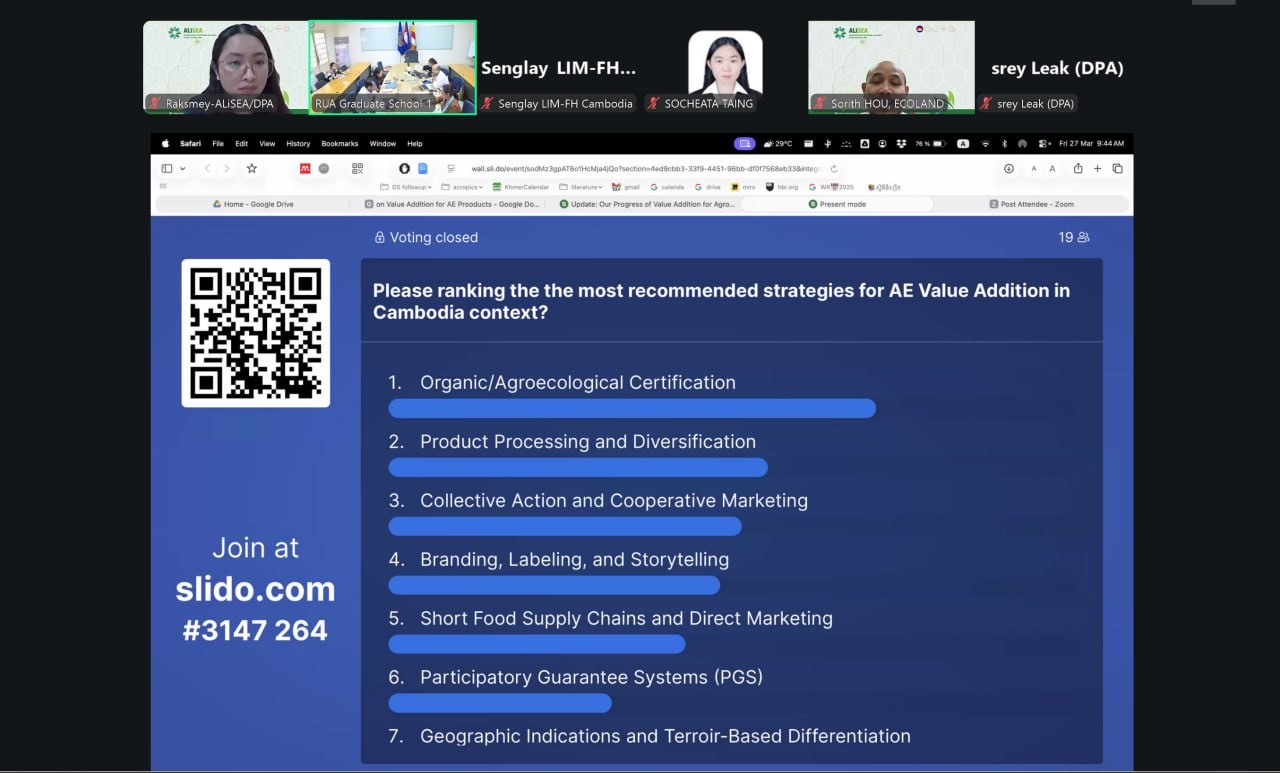
The workshop concluded with a perception survey conducted among participants to assess priorities for AE value addition strategies in the Cambodian context. The findings indicated that the most highly ranked strategies included organic and agroecological certification; product processing and diversification; and collective action and cooperative marketing, as well as branding, labeling, and storytelling.
In addition, short food supply chains and direct marketing approaches were recognized as important pathways for enhancing product value and market access. PGS were also included among the strategies assessed; however, the survey results revealed that PGS has not yet attracted significant attention from participants. This suggests a need for increased awareness-raising, capacity building, and demonstration of its practical benefits to encourage broader adoption and recognition.
This webinar was organized by ECOLAND and DPA under the support of the PArTNER project, led by Uni4Coop, and the Agroecology Promotion Program (APP), led by GRET.
Presentations are available to download below: